Rendering Leaf Lard or Beef Suet

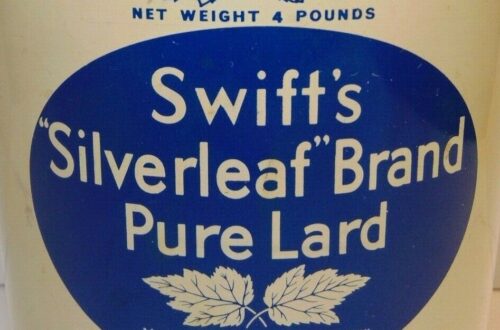
Antique Leaf Lard Tin

Antique Leaf Lard Tin

I’ve been using processed lard in my Vodka Pie Crust Recipe for several years because I get a more flaky crust than I do when using butter or shortening. But store bought lard is partially hydrogenated to extend its shelf life. Using commercially available lard simply is not as good as using lard that you render yourself. And when we’re talking lard, we’re talking about leaf lard, which comes from the fat that surrounds the kidneys of the pig. Kettle-rendered Leaf lard, sold in metal buckets, was a kitchen staple in the first half of the 20th century, and was most likely your grandmother’s (or great-grandmother’s) fat of choice when making pie crust, unless her preference happened to be beef suet.

I have recently moved from buying partially hydrogenated store bought lard to buying leaf lard from a farmer and bringing it home and rendering it. Using rendered leaf lard in my pie crust has definitely made a difference and I’ve been extremely pleased with the results. For this Thanksgiving, I’ll be switching things up a bit and using beef suet instead of leaf lard, because some of our Thanksgiving guests do not eat pork. But as far as the rendering process goes, it is the same for either lard or suet.

Rendering Leaf Lard

Rendering Leaf Lard

The first step is to dice up your leaf lard. I try for a 1/4-inch dice, because the smaller the dice, the more rendered lard we’ll have at the end of the process.  And here’s a tip: cold lard dices much easier than lard at room temperature.

Once it’s diced, you need to decide where you want to cook it. Rendering lard produces some rather unpleasant odors. Even with beef suet, which doesn’t smell nearly as bad, you may want to move your rendering activities outdoors if possible.

Now it’s time to put it in a kettle on low heat–we need to avoid browning the fat. You will want to leave your kettle uncovered.

At this point, the process does not need constant attention, but you should check in on it every few minutes, to make sure it’s not too hot. As long as the bits are not browning, everything is good. Gradually the diced lard will render liquid, although the bits of solid lard (cracklings) will remain. It should take about two hours to fully render the lard.

Leaf Lard, Separated From Cracklings

Leaf Lard, Separated From Cracklings

The Final Product

The Final Product

When the lard is fully rendered, you’ll want to slowly (and carefully) pour the contents of the kettle through a strainer and into a container (I use a glass food container), in order to separate the rendered lard from the cracklings. Let the rendered lard cool at room temperature until in solidifies.

Once that happens, your rendered leaf lard will be a very nice shade of white. It’s time to cover it and put it in the refrigerator until pie baking day arrives.

Lard lasts for up to two months in your refrigerator, and over a year should you choose to freeze it.

Posted in Desserts, Food, Recipes | Leave a comment

Apple Picking in Northern New England

It’s the time of the year when New England apple orchards put out their ‘pick your own’ signs and New Englanders pack up their families on the weekend and go in search of the ultimate apple picking experience. Here’s an admittedly arbitrary sampling of orchards to visit in New Hampshire, Vermont, Maine, and Massachusetts.

New Hampshire

Alyson's Apple Orchard, Walpole, NH

Alyson's Apple Orchard, Walpole, NH

Alyson’s Apple Orchard (Walpole, NH) is a can’t miss picking destination in New Hampshire’s Connecticut River Valley. Their pick-your-own orchards are open until Halloween and they also have a very nice farm stand.

During the fall they have several events, including a Chili Contest, Pumpkin Carving Demonstrations, an Heirloom Apple Tasting, and a Halloween Costume Contest. Their website, among other things, lists which varieties of apples are being picked on a particular weekend.

Alyson’s offers lodging for people who wish to explore the area in greater detail, and they also hosts weddings, special events, and corporate retreats.


DeMeritt Hill Farm, Lee, NH

DeMeritt Hill Farm, Lee, NH

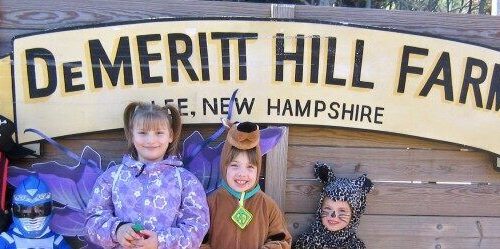
DeMeritt Hill Farm (Lee, NH). This place is a favorite of my son Matt and his wife Rebekah. If you’re anywhere near the seacoast region of New Hampshire, a visit to Lee is worth the effort. DeMerritt Hill Farm is particularly kid friendly; goats, chickens, horses, pigs, and more.

They offer hayrides, and host birthday parties and school tours. There are pony rides as well, and the fall season is full of events, including something they call their “Haunted Overload.”

There are more than twenty varieties of apples at the farm, and they also have an excellent farm store with many treats available from their own Bakery. For more information, visit my earlier post, Apple Picking at DeMeritt Hill Farm.

Vermont

Zeke Goodband, Orchardist at Scott Farm

Zeke Goodband, Orchardist at Scott Farm

Scott Farm (Dummerston, VT). Scott Farm is my personal favorite among the orchards I have visited in New England. The number of heirloom varieties at Scott Farm is staggering, but the Columbus Day weekend Apple Tasting is, in my opinion, the event of the season.

Zeke Goodband, the orchardist, possesses an incredible wealth of knowledge when it comes to heirloom apples, and ultimately, any apple tasting you might go to fits in one of two categories. Either Zeke ran it, or he did not. That’s why we make a point of going to the Scott Farm Apple tasting as often as our schedule permits.

In 2009 my wife and I went on our annual foliage drive and kicked it off with the early Scott Farm apple tasting, see this post for additional details.

Approaching Scott Farm, you’ll drive by Naulakha, the Vermont home designed by Rudyard Kipling, where he wrote the Jungle Books and Captains Courageous and began Kim and the Just So Stories. Both Naulakha and Scott Farm are owned and managed by Landmark Trust USA, a nonprofit that rescues and restores threatened historic properties.Scott Farm was also one of the filming locations for the movie  Cider House Rules, where all the apple orchard scenes were filmed.

Maine

Apple Acres Farm

Apple Acres Farm

Apple Acres Farm (South Hiram, ME). Northwest of Portland and tucked away between Sebago Lake and Jackson, New Hampshire, Apple Acres Farm is a great place to visit when you’re in the area.

Their website has a lot of great information and the combination of vintage and modern photographs are enchanting.

At Apple Acres Farm you can also sample homemade apple pie, try some of their fresh cider, picnic at one of the many picnic tables scattered through the orchard, and even do a bit of birdwatching. The orchard began its life in 1949, and it’s tucked well away from the hustle and bustle of modern life.

Massachusetts

Red Apple Farm, Phillipston, MA

Red Apple Farm, Phillipston, MA

Red Apple Farm (Phillipston, MA). In Massachusetts, many of the best foliage drives spend all or some of their time on the Mohawk Trail, which consists of the western portion of Route 2, an east-west highway that runs from Boston to Williamstown. Red Apple Farm is conveniently located in Phillipston, close to the official start of the Mohawk trail, which is in nearby Orange. So it’s a great choice for picking apples during a fall foliage drive.

Red Apple Farm has been owned and operated by the Rose family for four generations, and is a green farm–it is 100% powered by solar and wind energy. There is a farm stand and activities include hay rides, weekend barbeque events, farm animals and walking trails–and of course, PYO (pick your own) apples. You can choose from several different varieties, with additional ones available in the farm stand. Red Apple Farm also has pick your own pumpkins.

Posted in Road Trips | Leave a comment

Summer Folk Music Festivals in New England for 2011

New England has a generous number of music festivals that take place throughout the summer months each year. Regardless of the musical genre you are seeking, chances are that there’s a festival out there that’s just right for you. My own musical tastes lean towards American roots music (folk, bluegrass, old-timey, zydeco, blues, etc.). Here are just a few of New England’s music festivals that I find particularly appealing.

Basin Bluegrass Festival (July 7-10, Brandon, Vermont). If it’s bluegrass you’re looking for, this is a great place to watch, listen, and pick a few, if you’re so inclined.

Green River Music Festival (July 16-17, Greenfield, Massachusetts). Originally a Hot Air Balloon Festival, the balloons are still there, and the music is a great addition. Emmylou Harris, Toots and the Maytals, The Carolina Chocolate Drops, Terry Adams and the New NRBQ (and many, many more) will be playing this year!

Lowell Folk Festival (July 29-31, Lowell, Massachusetts). The largest free folk festival in America, the Lowell Folk Festival does an excellent job of presenting a wide variety of folk music and dance from around the world. The music, combined with the wonderful ethnic food sold at the festival, makes this an event not to be missed. This year’s festival performers range from The Angkor Dance Troup (Cambodian Dance) to Ledward Kaapana (Hawaiian slack-key guitar); from polka (Stanky and the Coal Miners) to Zydeco (Nathan and the Zydeco Cha Chas).

Prescott Park Folk Festival (July 30,  Prescott Park, Portsmouth, New Hampshire). This one-day festival sits in an absolutely beautiful location overlooking the water. Natalie MacMaster, Eilen Jewell, Christine Lavin, and C.J. Chenier and the Red Hot Louisiana Band are among this year’s headliners.

Newport Folk Festival (July 30-31, Fort Adams State Park, Newport, Rhode Island). Beginning in 1959, the Newport Folk Festival is the granddaddy of folk festivals in America. Joan Baez (in 1959) and Bob Dylan (in 1963) were both introduced to a national audience at the Newport Folk Festival, and the list of performers who have been featured there reads like a who’s who of American roots musicians. This year some of the more notable musicians appearing at the festival include The Civil Wars, Elvis Costello, Emmylou Harris, Earl Scruggs, Mavis Staples, The Wailin’ Jennys, and Gillian Welch.

Bennington Irish Music Festival (August 20-21, Colgate Park, Bennington, Vermont). If you’re enamored of all things Gaelic, visit lovely southern Vermont and enjoy the Bennington Irish Music Festival. The Makem and Spain Brothers, The Gibson Brothers, and Donnybrook Fair are among the talented musicians that will be providing the music. Irish crafts, jewelry, and art are also part of the goings-on.

Connecticut Folk Festival (September 9-11, Edgerton Park, New Haven, Connecticut). With Boston favorite Vance Gilbert as the emcee, and appearances by The Nields and Leo Kottke (not to mention the Green Expo that takes place at this event), this is one not to be missed!

Portsmouth Maritime Folk Festival (September 24-25, Portsmouth, New Hampshire). In its 28th year, this year the festival features such artists as Gordon Bok, Mudhook, and John Roberts (among others).

Posted in Music | Leave a comment

Dave’s Chili Con Carne

Chili, for most Americans, contains beans. This is a little odd, because as anyone who has been to a Chili competition can tell you, fillers such as beans, pasta, or rice are simply not allowed. This is pretty much consistent no matter what organization is running the competition.

My recipe adheres to the rules; not a bean nor a scrap of pasta to be found. If you haven’t tried making a traditional homemade Chili, this recipe is a great place to start. As written, it has just enough heat for you to notice, but not enough to make you suffer any life-threatening physical maladies. Let me know what you think!

Print This Recipe ... Print This Recipe ...

Ingredients

  • 14 ounces of Crushed Tomatoes (preferably Pastene if you can get it)
  • 4 slices of bacon, chopped fine
  • 4-5 pounds of boneless Chuck roast, trimmed and cut into 3/4 inch pieces.
  • Salt and pepper, to taste
  • 1 onion, chopped fine
  • 1 Jalapeño chili, seeded and chopped fine.
  • 3 tablespoons chili powder
  • 1/2 teaspoon pimentón
  • 1 1/2 teaspoons ground cumin
  • 1/2 teaspoon dried oregano
  • 4 garlic cloves, minced
  • 4 cups water
  • 1 tablespoon brown sugar
  • 2 tablespoons masa harina

Instructions

  1. Cut the chuck roast into 3/4 inch pieces, trimming away any excess fat, and reserving the larger pieces of fat for use in the next step. Pat the beef dry with paper towels and season with salt and pepper.
  2. Dice up the beef fat (suet) into 1/4 inch pieces, and cook over low heat in a large dutch oven, until the fat is rendered. Remove the solid pieces of fat and discard, keeping the liquid in the pot.
  3. Add the diced bacon and cook until the bacon is crisp. Remove the bacon and set aside.
  4. Remove all of the fat from the dutch oven and set aside, then pour 1 tablespoon of the fat back into the dutch oven and heat over medium-high heat until the fat is almost smoking.
  5. Brown half of the beef cubes, turning occasionally. This should take about eight minutes. Set the browned beef cubes aside in a bowl, add another tablespoon of the fat to the dutch oven, and brown the other half of the beef cubes as before. Add the second batch of browned beef cubes to the bowl with the first batch.
  6. Add the remaining fat to the dutch oven along with the onions and jalapeño peppers and saute until softened, about 4 minutes.
  7. Stir in the garlic, chili powder, cumin and oregano and cook until fragrant, about 30 seconds.
  8. Add the browned beef, the bacon, the pimentón, the water, and the brown sugar and bring to a boil. Reduce heat to low and simmer, covered, for one hour.
  9. Remove the cover and continue to simmer for another 45 minutes.
  10. Remove about a cup of the chili liquid and put in a microwave-proof bowl. Stir in the masa harina and microwave for one minute, until thickened. Slowly add the mixture to the chili and whisk until thickened, about five minutes.
  11. Salt and pepper to taste and serve.


Posted in Food, Main Courses, Recipes | Leave a comment

Maple Syrup Season in New Hampshire

Fieldstone Farm, East Rindge

It’s maple syrup season here in New England, and for the past few weeks, sugarhouses have been busy, boiling down maple sap to create maple syrup. You really don’t see sap buckets on the trees like the ones shown in the photograph on the left anymore. About the only place you can find those are in antique shops. That’s because the process of collecting sap has been streamlined over the years.

Look carefully into the woods and the evidence is unmistakable: plastic tubing snaking from tree to tree, terminating in large, sealed plastic containers that can hold many gallons of sap. It takes about forty gallons of sap to make one gallon of maple syrup, and streamlining the collection process allows farmers to tap a larger number of trees.

I really love maple syrup, probably because I grew up in a house where pancakes and waffles were served with margarine and fake, maple “flavored” syrup. Until I moved to New England, I truly don’t think I knew what I was missing. For me, no matter how good a pancake is, without real butter and authentic maple syrup it’s just not worth the effort.

Elisa and I are lucky enough to live within a mile of Fieldstone Farm, a small, family owned and operated farm in East Rindge, New Hampshire. Every year in the spring we head down the road to buy our maple syrup there. We usually wait until later in the season so we can buy Grade B maple syrup, which is darker and has a stronger maple flavor than what is usually found at the supermarket. Basically, there are four grades of syrup here, Grade A Light Amber; Grade A Medium Amber; Grade A Dark Amber, and Grade B. The grading is based entirely on the opacity of the syrup, and the same grade of syrup purchased from two different producers can and will have subtle differences in flavor. The lighter syrups are produced at the beginning of the season and the darker grades arrive later.

Fieldstone Farm's Sugarhouse

Visiting Fieldstone Farm during their open house weekend in March is great! They raise cattle and sell their own beef, and they also have a Buffalo wandering around, which is a somewhat uncommon sight in New Hampshire. They provide hot dogs and juice, and it’s quite nice to squeeze into their sugarhouse and sample their  syrup while they boil down the maple sap for the next batch.

When we’ve purchased our maple syrup and gotten back to the house, we make up a batch of fresh pancakes right away. It’s a distinct pleasure to have homemade pancakes with maple syrup when the syrup was bottled the same day, less than a mile down the road.

I’ve posted my pancake recipe previously, which I like for two reasons. First, you can make a mix of the dry ingredients and keep it in your cupboard, which gives you the convenience of using a store-bought mix, with the wholesome ingredients of home made. The second reason is because it’s really, really good. Give it a try!

Posted in Essays, Road Trips | Leave a comment

Homemade Griddle Cake (Pancake) Mix

The attraction of this recipe is that it allows you to make a dry pancake mix that is entirely homemade and consists only of a few simple ingredients. Then when you want to make pancakes for breakfast, it is as simple as adding three ingredients to the dry mix and head on over to the stovetop. Nothing could be easier. I have been making this recipe since the middle 1980s, when we picked up a very unconventional recipe book by Yvonne Young Tar, The Up With Wholesome, Down With Store Bought Book of Recipes and Household Formulas.

Unfortunately, the book has been out of print for many years, but Amazon and other online booksellers usually have used copies available.

Print This Recipe ... Print This Recipe ...

Ingredients

Basic Mix:

  • 5 cups all purpose flour
  • 2 Tablespoons plus 2 teaspoons baking powder
  • 1/4 cup granulated sugar
  • 2 teaspoons Salt

Additional Ingredients:

  • 1 cup milk
  • 1 egg, beaten
  • 2 Tablespoons margarine, melted

Making the Dry Griddle Cake Mix

  1. Mix together the basic mix ingredients and store in an airtight container for later use.

Making the Griddle Cakes

  1. To 1 1/2 cups of the dry mix (above), add the egg and milk and mix together.
  2. Then gradually mix in the margarine until the batter is smooth.
  3. To bake, spoon a ladle of batter onto a hot, lightly greased griddle. Turn when the top of the griddle cake develops tiny bubbles. Cook the other side and serve immediately with butter and fresh Maple Syrup.


Posted in Breakfast, Food, Recipes | Comments Off

A Better Refrigerator Magnet

Repurposed Refrigerator Magnet

Repurposed Refrigerator Magnet

First, I must confess. Refrigerator magnets are overused, and the flat expanses of the sides and doors of refrigerators suffer the consequences, becoming nothing more than bulletin boards of hopeless, cluttered kitsch. Nevertheless, most of these inexpensive little doo-dads fall (no pun intended) well short of their purpose. The magnets themselves simply aren’t strong enough to hold up anything heavier than a sparrow’s fart.

I’m one of those people who often keep several of my recipes stuck to the side of my fridge, partly for meal planning and partly as a reminder to myself regarding what to put on my shopping list. And most magnets will only hold 2-3 pieces of paper before they fail. I took inspiration from those brave pioneers that repurposed a lowly wood rasp and turning it into the world’s best cheese grate, and started to search for something that could be converted into the world’s best refrigerator magnet.

So I’ve repurposed the C.H. Hanson Magnetic Stud Finder as the ultimate refrigerator magnet. What makes this choice the best? Simple. It uses a pair of extremely powerful rare earth magnets, which give it enough strength to single-handedly holds up all 86 pages of the September 2000 issue of Fine Cooking (and yes, the Galettes on the cover taste awesome).

And bonus, if my electronic stud finder ever fails, I’ve got this little monster as a backup.

Posted in Tool Box Treasures | Leave a comment

You call that a knife?

Wusthof Classic Hollow-Ground Santuko

Wusthof Classic Hollow-Ground Santuko

One at a time over the years, as I could afford them, I have slowly put together a quality collection of kitchen knives. I couldn’t do without my bread slider or my paring knife, but in my collection, this one, the Wusthof Classic Hollow-Ground Santuko, is without a doubt the most versatile.

It has a number of features that make it my go-to knife. It’s edge, which is less curved than a traditional chef’s knife, simplifies chopping. Also, the hollow-ground blade helps whatever is being sliced (particularly things like tomatoes and cucumbers) to slide off the blade more easily than would otherwise be the case.  For me, the lack of a bolster that runs the entire width of the blade is definitely a plus, as the heel of the blade comes down flush on the cutting surface.

If I could only have one knife in the kitchen, this would be it. It might not be the knife of choice for paring an apple, but generally speaking, its versatility is unmatched. It truly is one of these ‘jack-of-all-trades’ kind of items.

Posted in Tool Box Treasures | Leave a comment